あること
∨
Q
∴
⇌
∞
∵
∨
Q
∴
⇌
∞
∵
∨
Q
∴
⇌
∞
∵
∨
Q
∴
⇌
∞
∵
∨
Q
∴
⇌
∞
∵
∨
Q
∴
⇌
∞
∵
∨
Q
∴
⇌
∞
∵
∨
Q
∴
⇌
∞
∵
∨
Q
∴
⇌
∞
∵
∨
Q
∴
⇌
∞
∵
∨
Q
∴
⇌
∞
∵
∨
Q
∴
⇌
∞
∵
∨
Q
∴
⇌
∞
∵
∨
Q
∴
⇌
∞
∵
∨
Q
∴
⇌
∞
∵
∨
Q
∴
⇌
∞
∵
∨
Q
∴
⇌
∞
∵
∨
Q
∴
⇌
∞
∵
∨
Q
∴
⇌
∞
∵
∨
Q
∴
⇌
∞
∵
∨
Q
∴
⇌
∞
∵
∨
Q
∴
⇌
∞
∵
ないこと
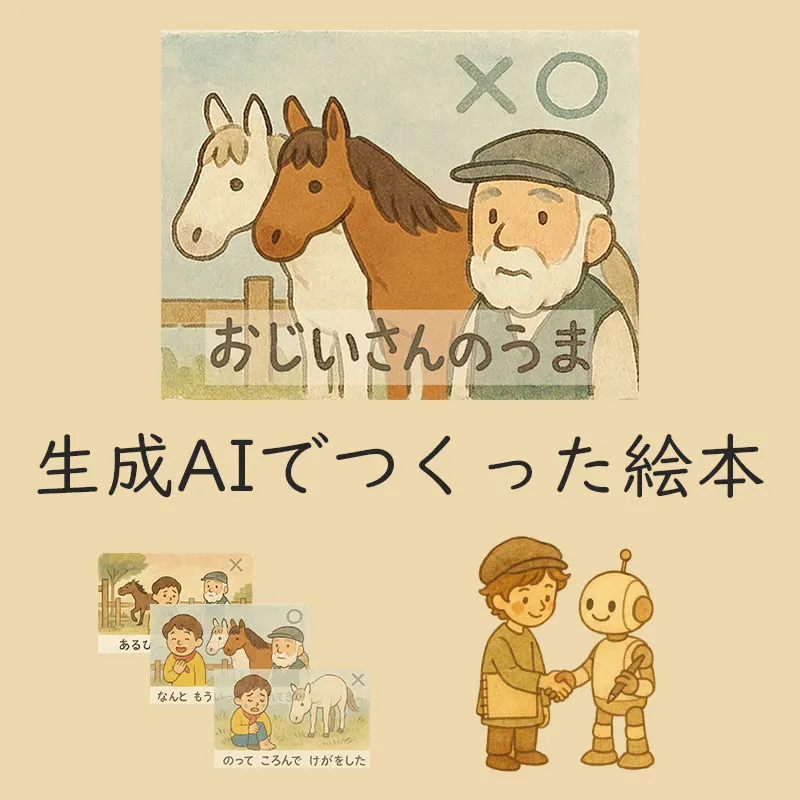
A Picture Book Created with Generative AI
Jo Takezawa
Kaiou Matsui
“Saio-ga-uma” is a proverb from China. It means you cannot know if an event is good or bad until later. If we can see a bad turn as a step toward good, then we have nothing to fear. I would like to pass this positive worldview on to children. Since few picture books convey this worldview, I made one.
It is often said that AI works are boring and have no personal touch, calling them “without” value. But human artists also develop their practice and establish their stylistic voice through copying. Even with AI, when a person gives prompts with intent and edits the work, they can create art with a clear voice—art “with” value. This work asks: Where is the true difference between creating by hand, brush, mouse, or AI?