あること
ないこと
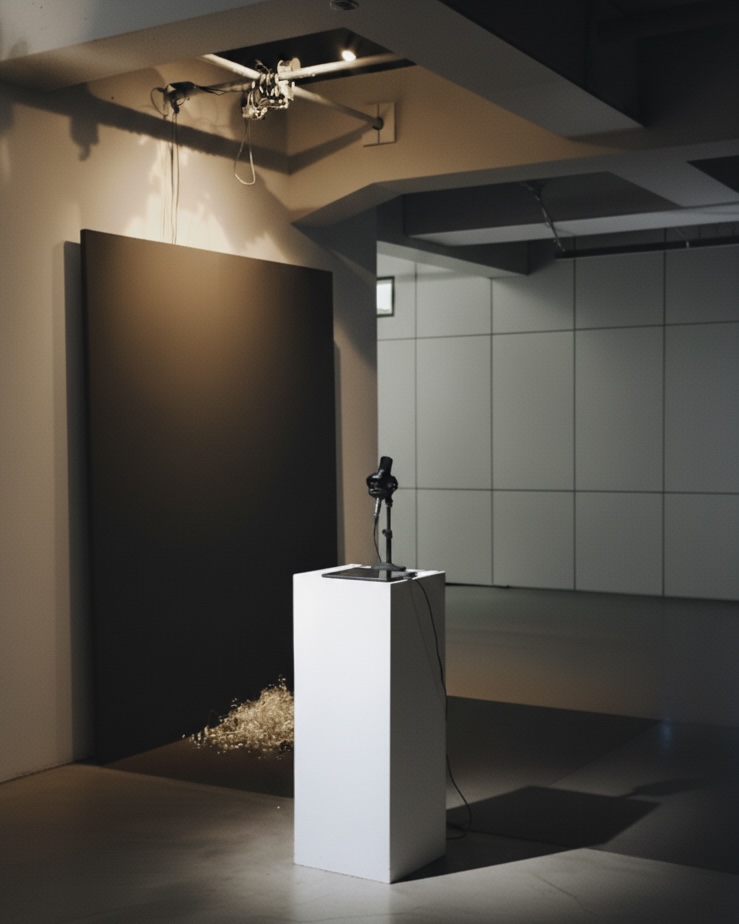
Voice Dune
Speak. Whisper. Shout. Laugh. Every kind of “voice” should, in principle, propagate equally through the air. Yet the voices that travel through our society carry positions, authority, truths and untruths—and in doing so, they lose their equality. Voice Dune is not a device for recording voices. When a severed wire settles upon the sand dunes, that very moment of accumulationit becomes part of countless other wires. Stripped of meaning, context, and individuality, each “voice” takes the form of a wire— and together, they quietly pile up, forming a single vast shape.
In this installation, your voice is captured by a microphone and instantly transformed into waveform data, which controls a wire-bending machine. The machine responds to each sound by delicately shaping and cutting a single strand of metal. Once cut, the wire falls quietly into a growing dune. Over time, these silent remnants form a shared landscape: a voice dune shaped not by volume or authority, but by presence.